





Biodiversity is becominga competitive factor.
Biodiversity is a business driver—and essential for resilient, future-proof supply chains. Food for Biodiversity brings together stakeholders from business, agriculture, science, and civil society to make biodiversity a strategic priority. We provide companies with practical tools, proven standards, and a strong network for tangible impact.
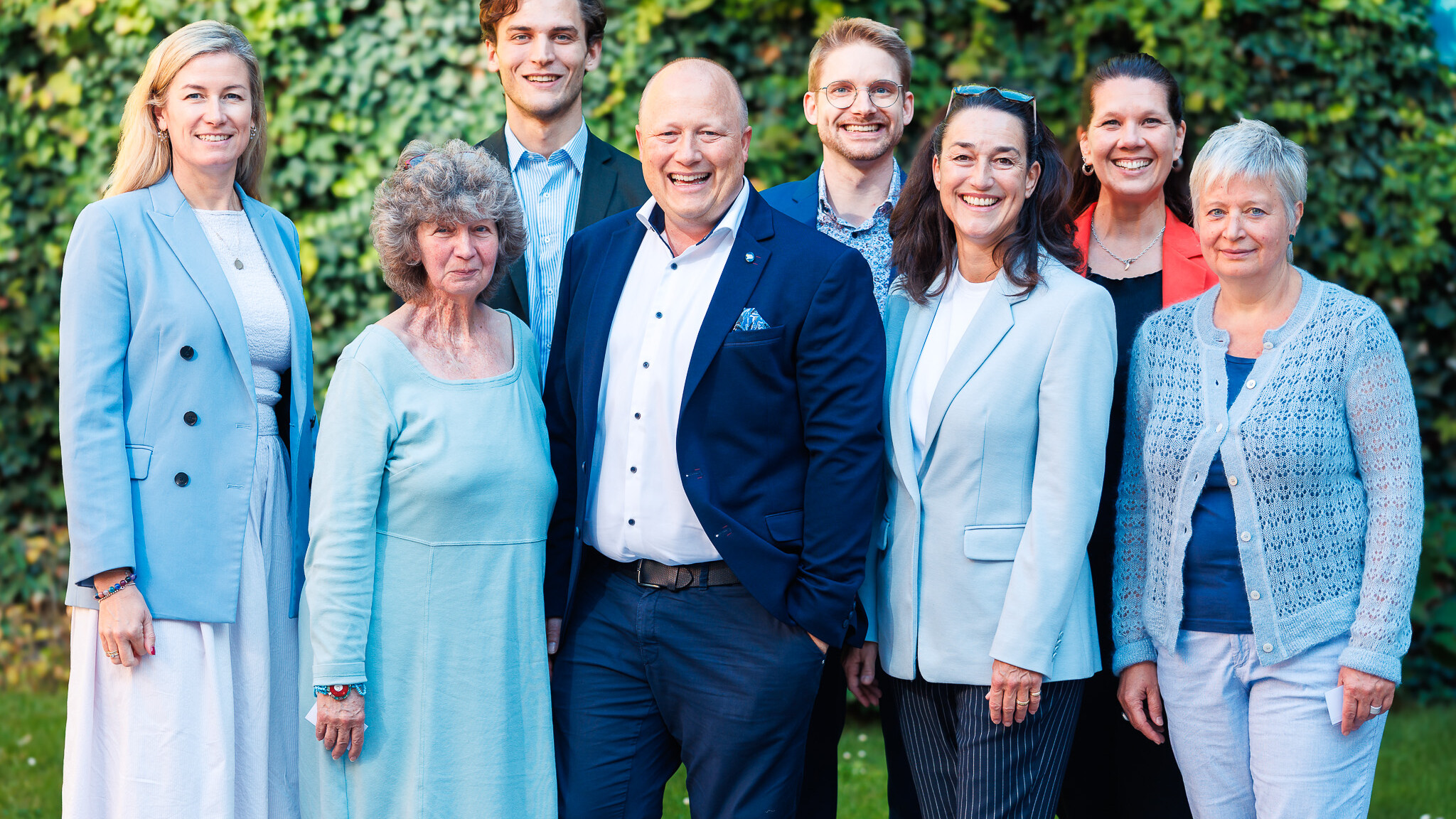
Food for Biodiversity connects stakeholders from the food sector to strategically anchor biodiversity within the industry.

Founded in 2021 by stakeholders from companies, environmental organizations, standards bodies, and NGOs, we jointly advance solutions that create impact.

We provide companies with concrete tools, field-tested standards, and a strong network for real progress.
Together we make a difference!
Marion Hammerl
“The food sector, with agriculture as its most important supplier of raw materials, must become part of the solution to halt the dramatic loss of biodiversity. The sector should have a strong interest in doing so, even only for its own sake, because its economic foundations are at stake. However, individual pilot projects will not be enough — protecting and responsibly managing biodiversity must become part of day-to-day business across the entire sector. Food for Biodiversity provides a framework in which industry stakeholders —supported by science and NGOs — can work together in a targeted, practical manner.”
Ralph Dejas
“Promoting biodiversity has been an essential cornerstone of our association’s philosophy since it was founded in 1985. Drawing on our many years of expertise, we provide valuable impetus for the necessary ecological transformation of viticulture and beyond.”
Rudolf Bühler
“For decades, ECOLAND, together with the Schwäbisch Hall Farmers’ Association and Akademie Schloss Kirchberg, have actively implemented projects for preserving biodiversity: conserving traditional livestock breeds such as the Swabian-Hall pig and the Limpurger cattle, as well as historic local crop varieties such as Hohenlohe yellow mustard and Hohenlohe coriander. Our work also includes climate-resilience projects with more than 1,400 member farmers and the implementation of further biodiversity measures through the Hohenlohe organic model region. In the words of Albert Schweitzer: ‘It is what we do that ennobles us!’ Rudolf Bühler adds: ‘We are entitled to cultivate nature—but we are not allowed to exploit it!’”
Carina Mazzuz
"We are strongly committed to Food for Biodiversity because of the great opportunity we have to exchange proposals for improvement on biodiversity and climate change issues with our colleagues, as well as to learn about the specific needs of the sector by promoting and refining our sustainability programme with new methodologies to increase biodiversity and reduce the use of plant protection products."
Torsten Klimpel
“For many years, OroVerde has supported the socio-ecological transformation of agricultural systems in Latin America. Together with our partners, we develop solutions to promote biodiversity in agriculture and create sustainable prospects for producers throughout the supply chain. As part of Food for Biodiversity, we strengthen the network and contribute our local experience, particularly in coffee, cocoa and banana production, to live up to our responsibility as a consumer country within global supply chains and help build a socially just and ecologically stable future.”
Johanna Saxler
“For more than 40 years, Naturland has been driving the organic transformation of agriculture. Through farming practices aligned with Naturland standards, farmers contribute in many ways to the protection and promotion of biodiversity. At the same time, climate change and biodiversity loss continue to accelerate. Our aim is to turn these challenges into opportunities for agriculture by working closely with stakeholders across the food value chain. Food for Biodiversity provides an ideal platform for dialogue, collaboration, and collective action.”
Dr. Jan Henke
“As one of the world’s largest certification systems, ISCC has been committed to conserving biodiversity since it was founded in 2010. Certified food-industry companies can use the ISCC logo to communicate the sustainable cultivation of raw materials transparently to consumers. We look forward to working with the association members to develop solutions that enable the food industry to make a positive contribution to conserving biodiversity.”
Pegah Bayaty
„Seit 60 Jahren setzt sich der WWF Österreich für den Schutz und die Wiederherstellung der Biodiversität ein. Die Vielfalt unseres Planeten steht aufgrund unseres Ernährungssystems unter starkem Druck: 70% des Verlustes sind der Produktion tierischer Lebensmittel zuzurechnen. Als Mitglied des Vereins Food for Biodiversity möchten wir den Schutz der biologischen Vielfalt entlang der gesamten Wertschöpfungskette von Unternehmen verankern. Größter Hebel dabei ist ein Mehr an pflanzlichen und ein Weniger an tierischen Lebensmitteln.“
Nina Siegel
“By joining the Food for Biodiversity industry initiative, we at Zentis actively support the conservation and promotion of biodiversity in our supply chain. Drawing on the association’s expertise and our long-standing, trust-based relationships with suppliers, we implement projects directly in the field. Together with one of our suppliers, we have already successfully completed an initial pilot project on biodiversity-friendly apricot cultivation. We look forward to continuing our collaboration and exchanging ideas with other companies, associations and biodiversity experts. Together, we can make a significant contribution to protecting biodiversity.”
Pia Kissinger
“Biodiversity is one of AöL’s core topics. Together with our member companies, we are advancing the protection of biodiversity. Joining forces with companies beyond the organic sector through Food for Biodiversity enables us to work with other food-industry businesses to address challenges and pool our efforts. After all, when we share a common goal, it makes sense to follow a common path.”

Fit for Biodiversity- Solutions for the Agri-Food Sector
How to
create real impact in agri-food value chains?
support biodiversity-friendly agriculture?
credibly communicate biodiversity action?
Conference | 6-7 October 2026 | Brussels
News
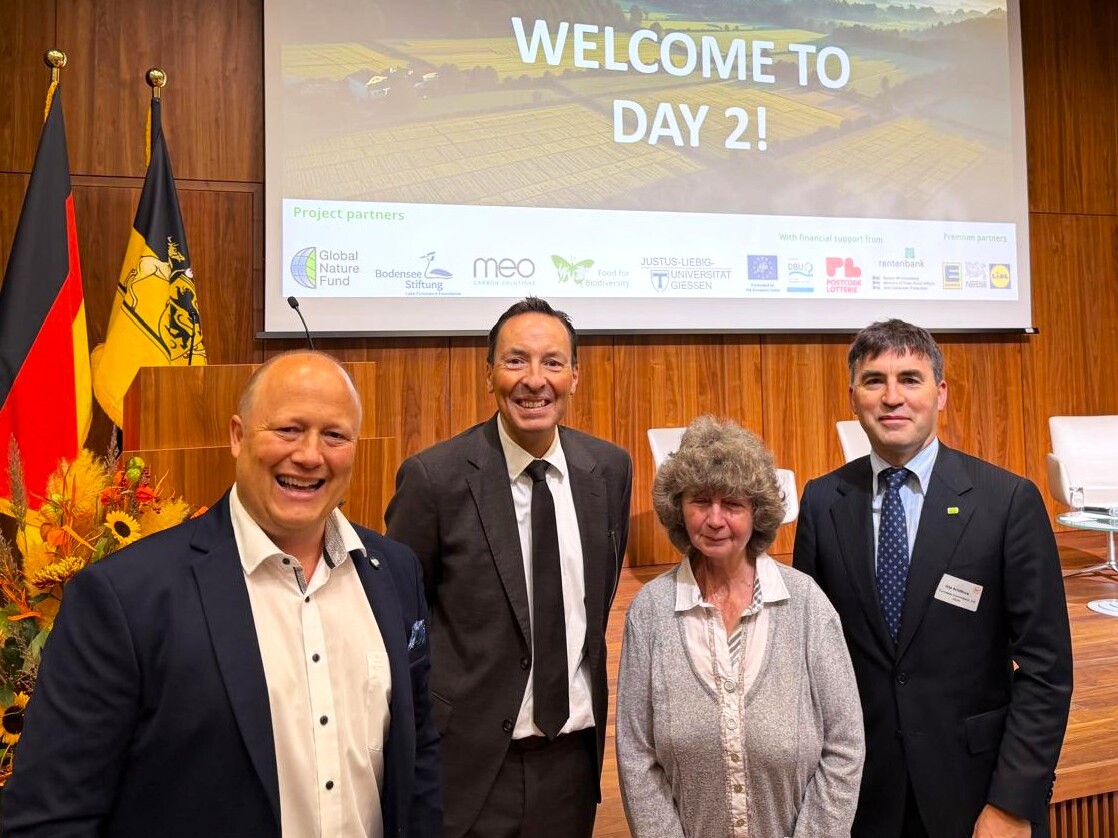
15. October 2026
Political Appeal: Embedding Biodiversity in Food Supply Chains
Among other things, the appeal calls for incentives for volunteer work and reliable compensation for biodiversity…
6. October 2026
Strategy for the Roll-out of the Basic Set Temperate Regions
With the Roll-out Strategy, Food for Biodiversity provides a framework for putting the Basic Set Biodiversity Criteria…
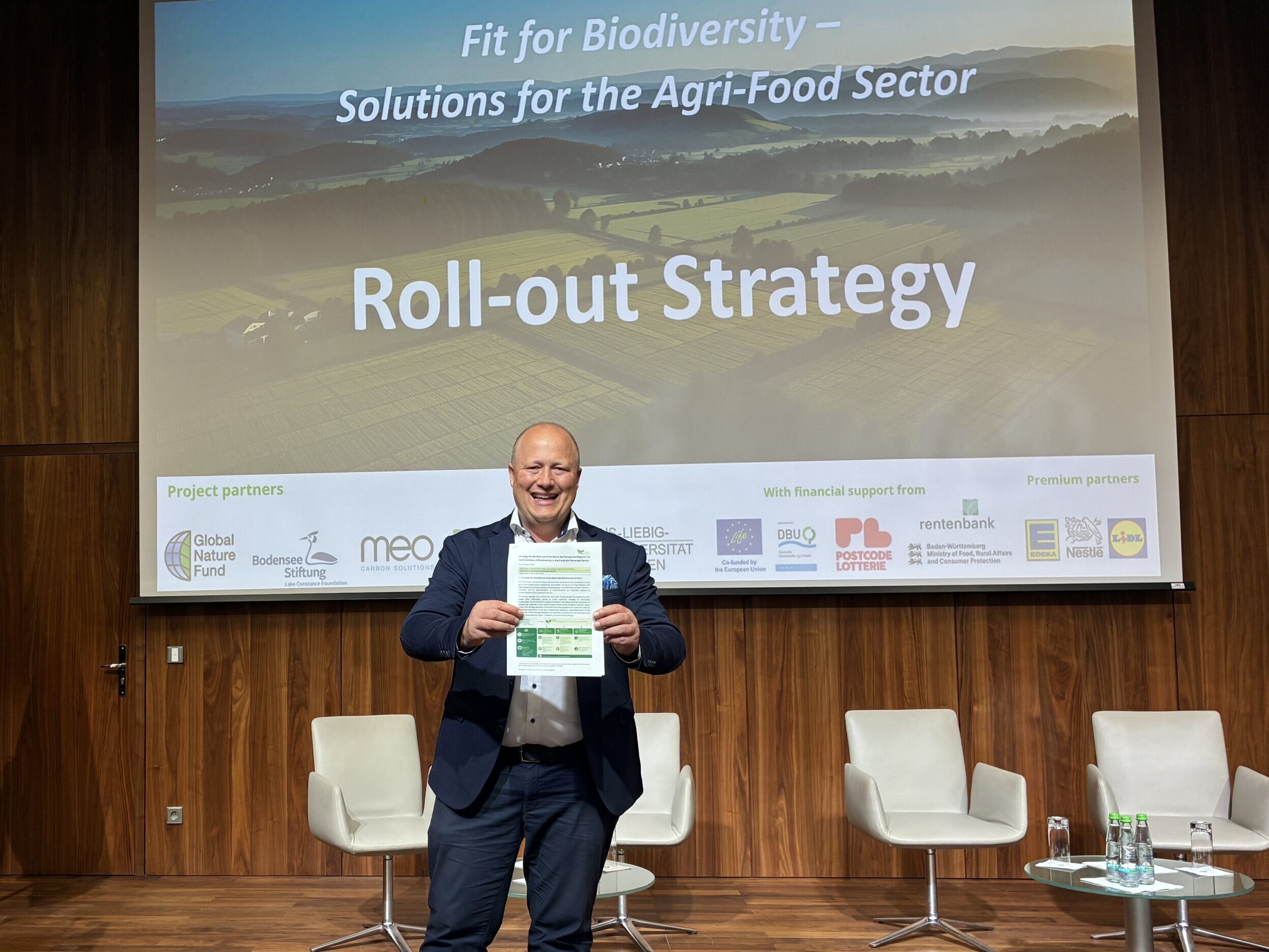
6. October 2026
Food Sector Launches Joint Roadmap for Greater Biodiversity
The members of Food for Biodiversity have adopted a joint roadmap for greater biodiversity in agricultural supply…
9. July 2026
Conference – Fit for Biodiversity – Solutions for the Agri-Food Sector
How to create real impact in agri-food value chains? support biodiversity-friendly agriculture? credibly communicate…
2. July 2026
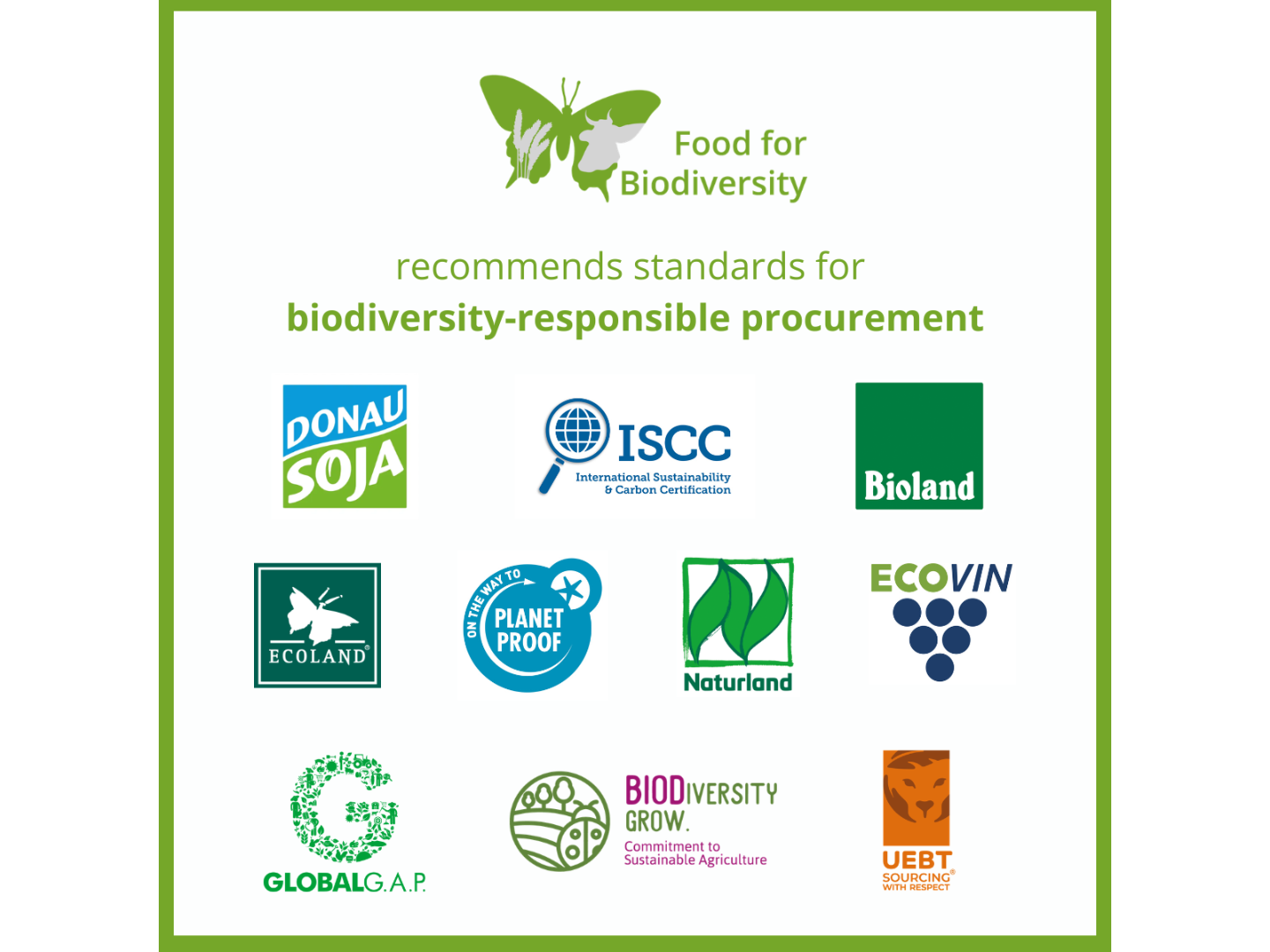
Biodiversity-Responsible Procurement Needs Orientation
Ten standards engaged at Food for Biodiversity already meet more than 70% of the criteria in the core set of…
6. February 2026
Bioinputs as a Key to Sustainable Agriculture – Insights from our Webinar
Bioinputs are gaining importance, offering sustainable alternatives, but scaling requires research, policy support, and…
26. January 2026
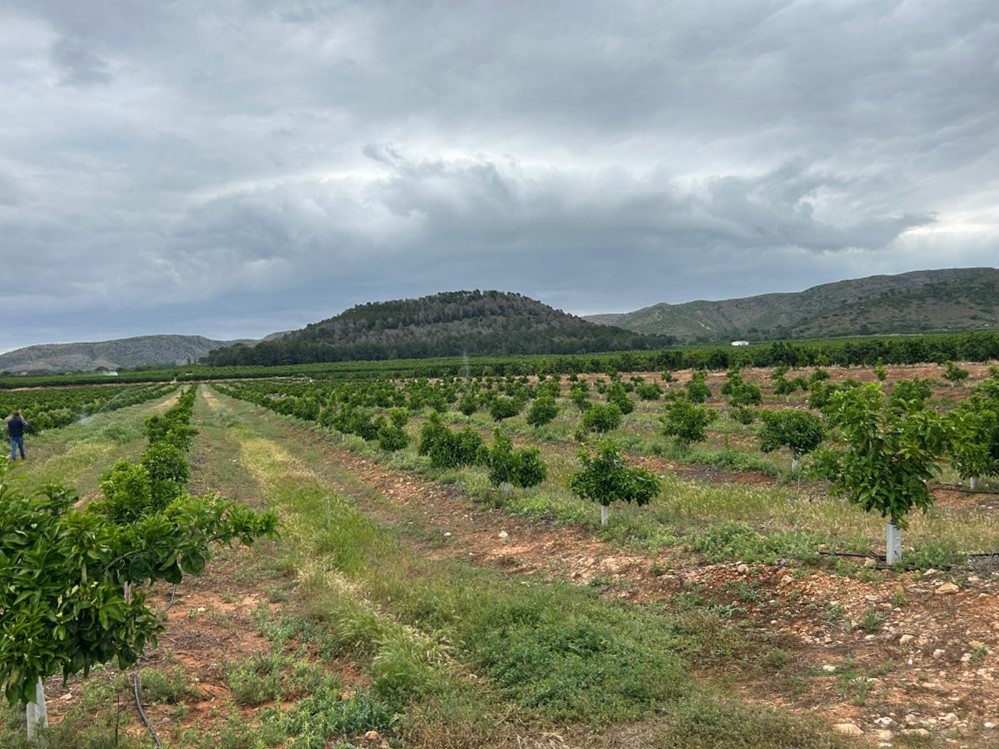
New Pilot Project: Biodiversity as an Opportunity for Agriculture
A new pilot project in Spain is testing a practical system for recording biodiversity and environmental indicators…
26. July 2025
European Business & Nature Summit 2025
On October 23 and 24, 2025, the European Business & Nature Summit will take place in Helsinki. Organized by the EU…

16. July 2024
Working Together for Greater Biodiversity: Food Industry Discusses Solutions to Stop Biodiversity Loss
Effectively integrating biodiversity protection into supply chains—how this can be achieved through significant steps…
26. May 2024
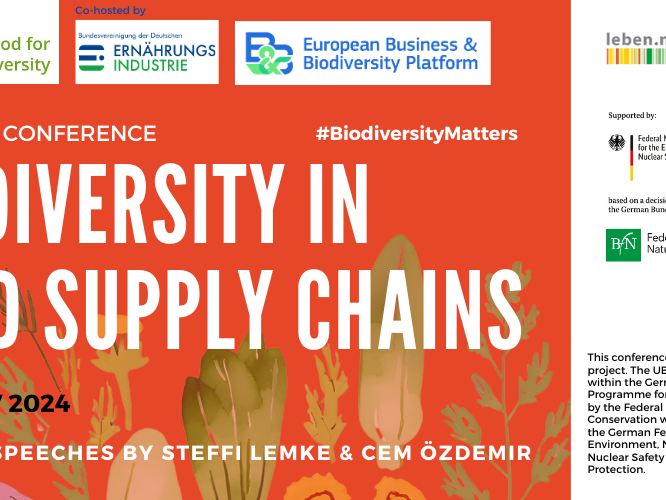
13. – November 14, 2024 European Conference – Biodiversity in Food Supply Chains
Our conference demonstrated: Biodiversity is central to sustainable food systems. Pragmatism, data as a tool, and…


