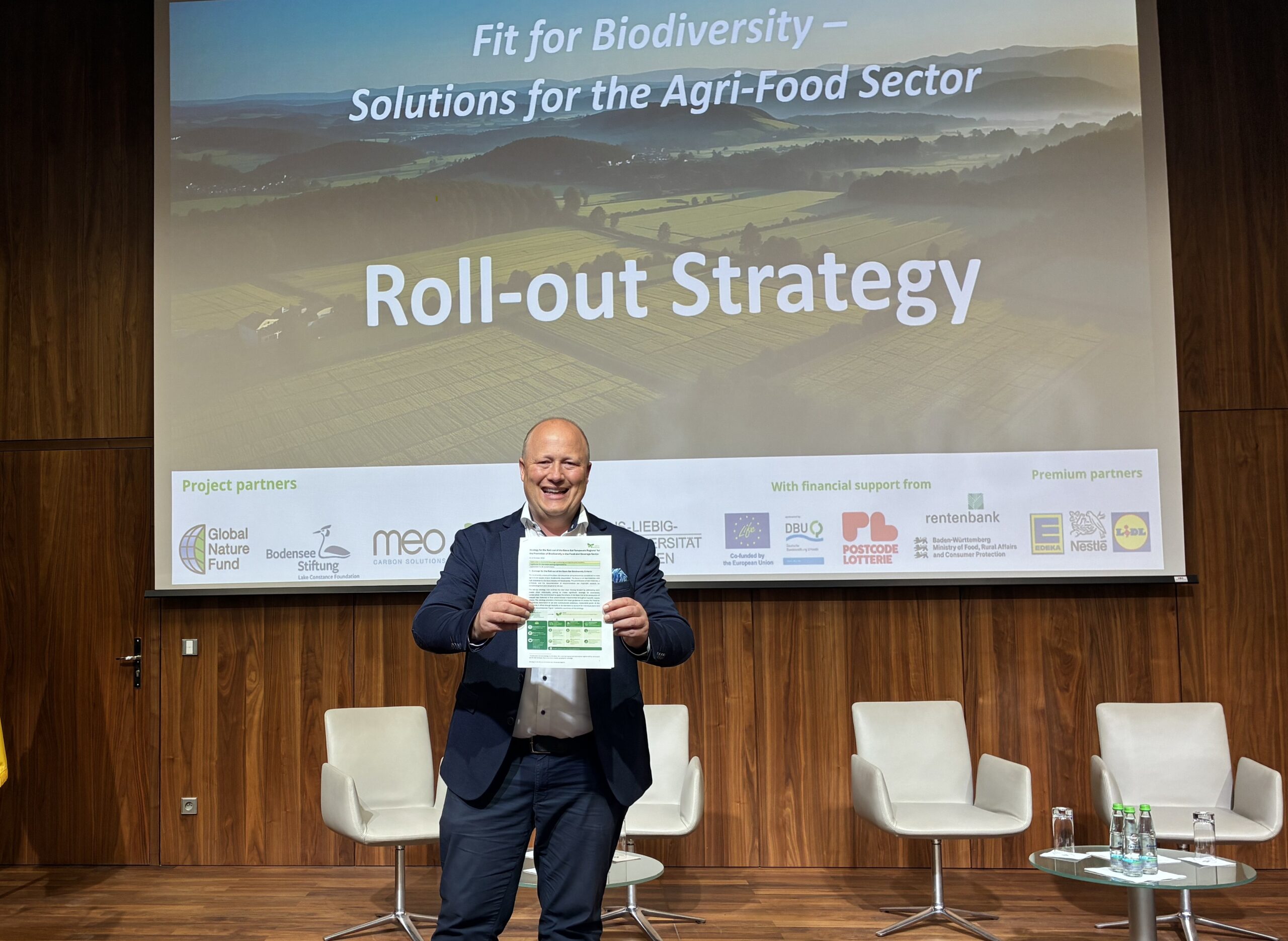
Bonn/Brussels, October 6, 2026: The members of Food for Biodiversity have adopted a joint roadmap for greater biodiversity in agricultural supply chains, the “Strategy for the Roll-out of the Basic Set Temperate Regions for the Promotion of Biodiversity in the Food and Beverage Sector”. The roll-out strategy is intended to help embed biodiversity criteria more firmly in the requirements of sustainability standards and in the procurement specifications of food companies.
The strategy is based on the Basic Set of Biodiversity Criteria for Temperate Regions, developed by Food for Biodiversity together with food companies, standard-setting organisations, environmental organisations and the scientific community. It brings together key requirements for protecting and promoting biodiversity in agricultural production. The Basic Set serves as a common framework of reference for companies and standard-setting organisations. The roll-out strategy and the further development of the Basic Set are part of the EU LIFE project Fit for Biodiversity.
“Five years after the association was founded, Food for Biodiversity has established itself in the food sector,” says Peter Zens, Chair of Food for Biodiversity. “By adopting the roll-out strategy, we are setting out a pathway for systematically incorporating biodiversity criteria into the procurement processes of food companies. Among other things, more semi-natural habitats will be created and better protected, and agricultural practices will be improved.”
Concrete targets for gradual implementation
The implementation focuses on seven high-risk agricultural commodity groups in temperate regions: vegetables, fruit, wheat, rapeseed, sugar beet, milk and meat. For the gradual roll-out, companies can initially prioritise which commodity groups to start with, based on their procurement structures and the complexity of their supply chains.
All members of the association support the strategy. Standard-setting organisations and companies have a particular role in implementing the roll-out strategy for temperate regions.
By 2030, the strategy envisages implementing the biodiversity criteria of the Basic Set for at least two of the seven high-risk commodity groups. The target is at least 85 per cent of the procurement volume of the selected commodity group for private-label products. The procurement volume may cover fresh products, juices, preserves, convenience products, etc. and is defined by the company. By 2040, implementation is to be gradually extended to all seven high-risk commodity groups. Food for Biodiversity documents and monitors the implementation of the roll-out strategy.
Standard-setting organisations play a central role in implementation. Standards that cover at least 70 per cent of the Basic Set criteria relevant to them are recommended by Food for Biodiversity. Companies can use these standards in their procurement to meet the requirements of the Basic Set and thereby implement the roll-out strategy. Within five years, alignment of the standards with the Basic Set is to increase to at least 90 per cent.
About Fit for Biodiversity – the project
The EU LIFE project Fit for Biodiversity – Biodiversity Governance and Performance in the Food Sector aims to improve biodiversity performance in the food sector and develop effective strategies for protecting ecosystems. Fit for Biodiversity supports agri-food companies in identifying biodiversity risks, implementing effective measures and systematically integrating biodiversity into corporate and supply chain strategies.
The project is co-financed by the European Union’s LIFE Programme, the German Federal Environmental Foundation (DBU), the Ministry of Food, Rural Areas and Consumer Protection of Baden-Württemberg, Rentenbank, the German Postcode Lottery, and the premium partners Nestlé Deutschland, EDEKA and Lidl.
More Articles
8. October 2026
Strategy for the Roll-out of the Basic Set Temperate Regions
With the Roll-out Strategy, Food for Biodiversity provides a framework for putting the Basic Set Biodiversity Criteria…
6. February 2026
Bioinputs as a Key to Sustainable Agriculture – Insights from our Webinar
Bioinputs are gaining importance, offering sustainable alternatives, but scaling requires research, policy support, and…
9. July 2026
Conference – Fit for Biodiversity – Solutions for the Agri-Food Sector
How to create real impact in agri-food value chains? support biodiversity-friendly agriculture? credibly communicate…
2. July 2026
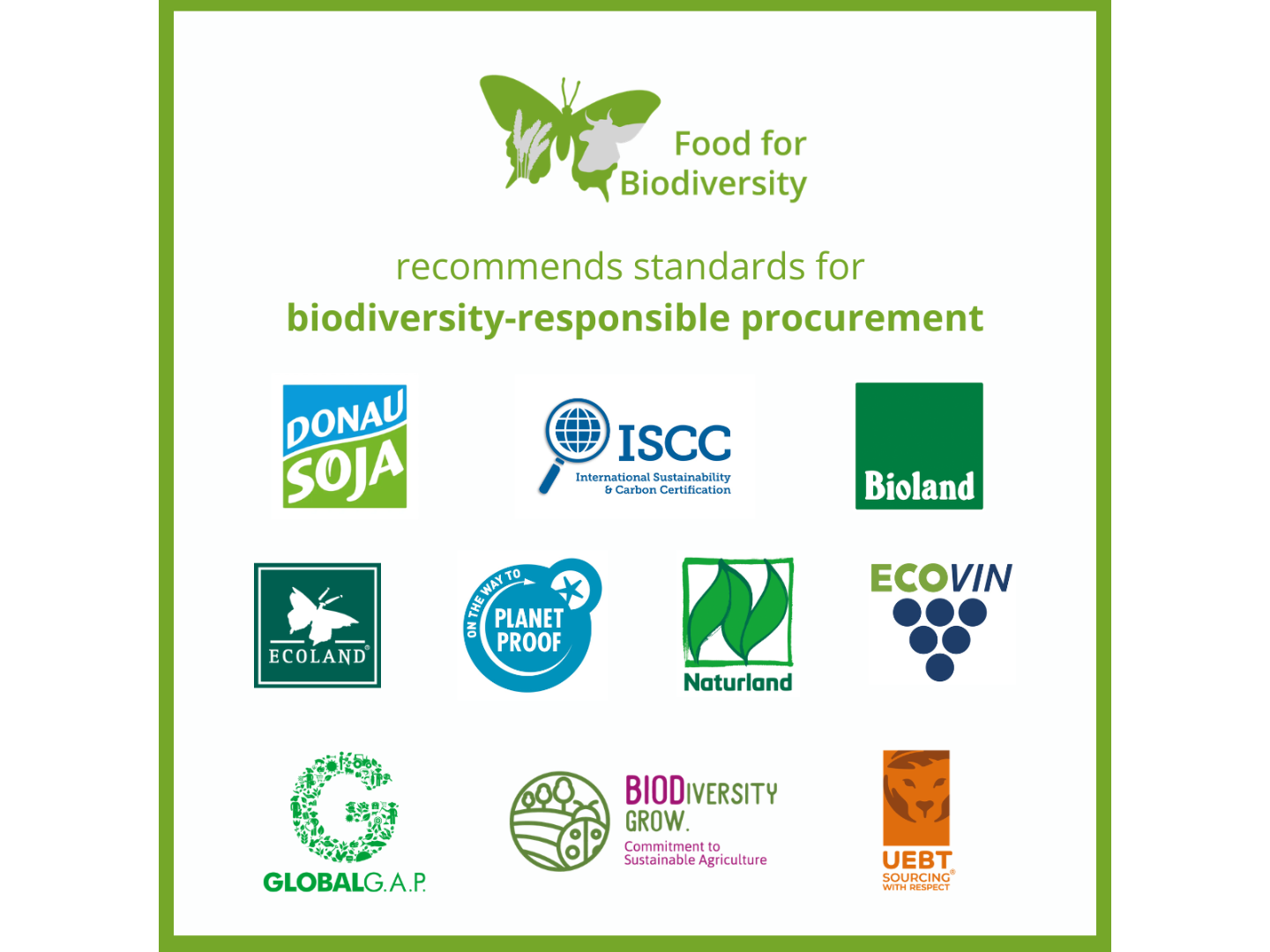
Biodiversity-Responsible Procurement Needs Orientation
Ten standards engaged at Food for Biodiversity already meet more than 70% of the criteria in the core set of…
26. January 2026
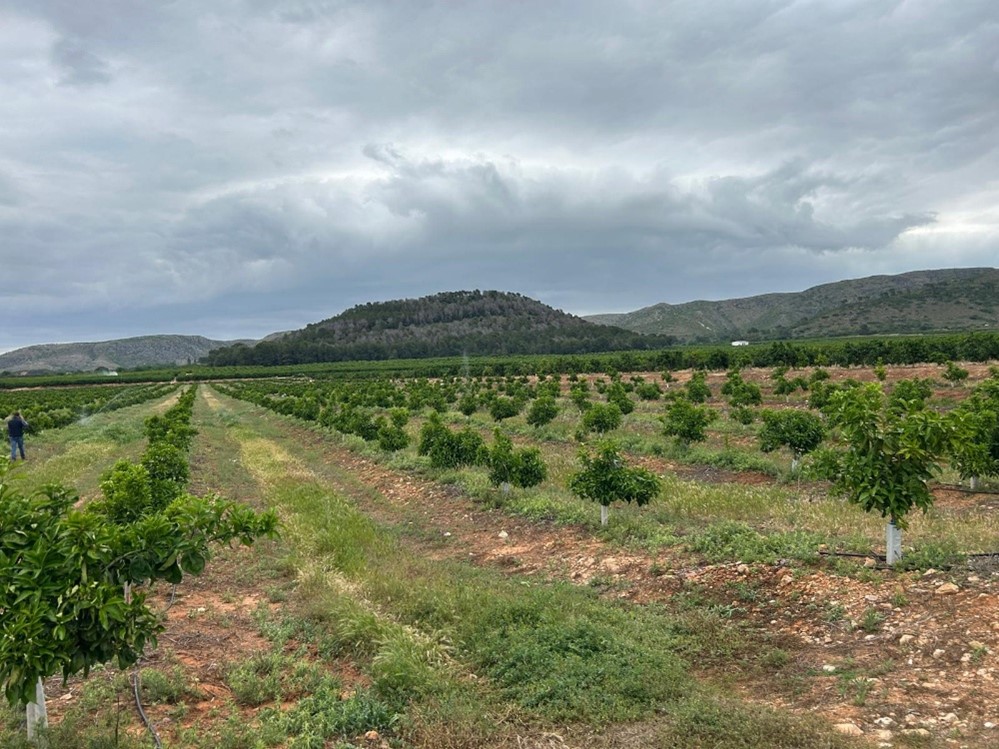
New Pilot Project: Biodiversity as an Opportunity for Agriculture
A new pilot project in Spain is testing a practical system for recording biodiversity and environmental indicators…

26. July 2025
European Business & Nature Summit 2025
On October 23 and 24, 2025, the European Business & Nature Summit will take place in Helsinki. Organized by the EU…

16. July 2024
Working Together for Greater Biodiversity: Food Industry Discusses Solutions to Stop Biodiversity Loss
Effectively integrating biodiversity protection into supply chains—how this can be achieved through significant steps…
26. May 2024
13. – November 14, 2024 European Conference – Biodiversity in Food Supply Chains
Our conference demonstrated: Biodiversity is central to sustainable food systems. Pragmatism, data as a tool, and…
3. March 2024
Strong alliance for biodiversity – Food for Biodiversity and Biodiversity in Good Company offer dual membership.
Both initiatives are committed to preserving biodiversity as the foundation of our economic activity and carry out…
26. October 2023
Food for Biodiversity was at ANUGA 2023 in Cologne
From October 7-11, 2023, we were present as an exhibitor at ANUGA in Cologne. At our booth, as part of the Retail Forum…


