
Roll-out Strategie des Basis-Sets für gemäßigte Breiten
1. Concept for the Roll-out of the Basic Set Biodiversity Criteria
The biodiversity criteria of the Basic Set should be comprehensively considered to make agricultural supply chains ‚biodiversity responsible‘. The focus is on raw materials with high relevance for the food industry and biodiversity. The prioritisation of raw materials, a schedule, and the documentation of implementation are important aspects for transitioning from pilot projects to roll-out.
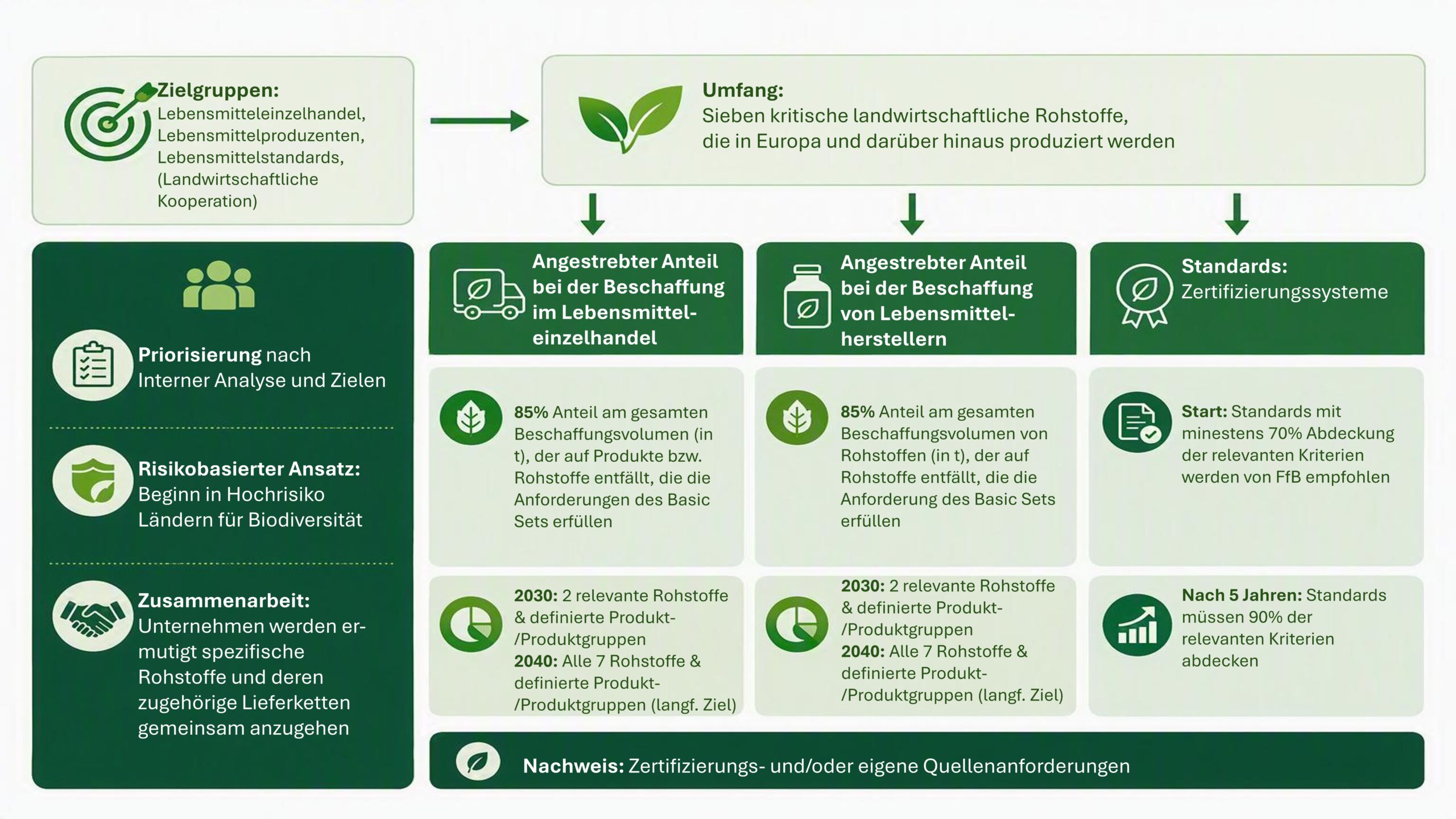
The roll-out strategy now outlines the next step: moving forward by addressing each supply chain individually, aiming to create significant leverage for biodiversity conservation. The commitment to apply the criteria of the Basic Set to the production of relevant raw materials is thus systematically implemented throughout specific supply chains. This strategy provides a framework and clear guidelines to enable the Food for Biodiversity association to set and communicate ambitious, measurable goals. At the same time, it offers enough flexibility to its members to account for individual plans and specific circumstances. Figure 1 presents a summary of the strategy.
2. Target Groups
The primary objective is to encourage the food and beverage sector in Germany, as well as internationally, to adopt the Basic Set as a foundational requirement of biodiversity performance. Accordingly, implementation efforts extend beyond Food for Biodiversity members and are directed towards all stakeholders within the sector, including retailers, manufacturers, standard-setting organisations, suppliers, and farmers‘ cooperatives. Each stakeholder group has to play their part in the roll-out:
Food and beverage retailers, producers and suppliers are expected to integrate the Basic Set criteria into the supply chains of the risk raw materials. They are encouraged to support farmers within these supply chains to enhance on-farm biodiversity performance, providing assistance through financial and other incentives, training, and extension services. All actors along shared supply chains are encouraged to cooperate to identify and implement solutions jointly. Food for Biodiversity will gather practical approaches for individual company-specific programmes that support the financing of improved biodiversity performance. These recommendations are non-binding and can be adapted by companies according to their respective supply chain contexts and implementation capacities.
Standard-setting organisations play a central role by certifying producers of risk raw materials that comply with the Basic Set criteria, thus facilitating wider adoption throughout the sector. Another crucial aspect is capacity building, e.g., supporting farmers in the practical implementation of the standards, as well as providing targeted training on biodiversity. Through capacity building and individual guidelines, or by providing experts, farmers are empowered to effectively and continuously implement biodiversity-promoting measures.
Business associations, environmental non-governmental organisations, and scientific institutions offer their expertise and communication resources to advance the adoption and implementation of the Basic Set.
Farmer cooperatives are encouraged to align with the Basic Set criteria and implement relevant biodiversity measures, recognising the vital role that farmers play in preserving biodiversity.
3. Risk Raw Materials
The Basic Set roll-out will be focused on a group of seven risk raw materials that have been selected by Food for Biodiversity and its members. The selected risk raw materials cover the following:
- Vegetables*
- Fruits**
- Wheat
- Rapeseed
- Sugar Beet
- Dairy***
- Meat***
* = Subgroups include fruit vegetables; root, tuber, onion vegetables; leafy, stem vegetables; cabbage vegetables; ** = subgroups include pome, stone fruit, strawberries, soft fruit, citrus fruit; *** main focus fodder: maize, wheat, rapeseed, soya
4. Steps for the Roll-out
4.1. Scope of the Basic Set
The term „Basic Set“ always refers to the current document of the published Basic Sets. Currently, the 2nd edition of the Basic Set Europe is meant (Basic Set Biodiversity Criteria for the Food Sector – Basic Set for temperate regions (Europe, 2nd Edition)).
The Basic Set covers supply chains for the defined seven risk raw materials, focusing on producers and suppliers in temperate regions (see Appendix 1 for details). It applies solely to agricultural production and excludes processing or other value chain stages. To achieve effective biodiversity protection, enhancement and restoration, the Basic Set criteria should be applied to the entire farm. If a standard certifies on crop-level, criteria for general practices, such as the Biodiversity Action Plan, should be valid for the whole farm.
4.2. Specification of the Basic Set (Commodity Basic Sets)
In 2026, Food for Biodiversity will develop six Basic Sets tailored to specific raw materials. The six commodities have been selected from a list of seven risk raw materials. Some of these commodities currently have a low standard coverage. Here, the aim is to improve existing standards or even motivate standard-setting organisations to create a standard based on the raw material-specific Basic Sets.
4.3. Implementation Plans for each Raw Material
Prioritisation: Companies prioritise raw materials according to individual possibilities, the complexity of supply chains and composition of products.
Market Scope: The focus is on products for the German market. An expansion to additional European market countries will be evaluated
Risk-based approach: The roll-out should commence in countries identified as high risk, based on the WWF Biodiversity Risk Filter, Water Risk Filter or similar tools. It is strongly recommended that retailers, along with food and beverage producers, collaborate to initiate activities in these high-risk sourcing regions. Focus should be on products and product groups that have the highest risks for biodiversity (products with the highest raw material shares).
Cooperation: Companies are encouraged to collaboratively address specific raw materials and their associated supply chains. As many organisations share suppliers, a coordinated approach can enhance implementation efforts and yield more effective outcomes for biodiversity.
4.4. Compliance with the Basic Set
Ideally, all criteria of the Basic Set with relevance for the raw material selected are considered.
Standard-setting organisations:
Standard-setting organisations fulfilling at least 70 % of the relevant criteria will be recommended by Food for Biodiversity as an instrument for rolling out the Basic Set of Biodiversity Criteria.
The standard-setting organisations commit to achieve a minimum of 90 % of the relevant Basic Set Criteria after five years. The organisations will provide a plan to Food for Biodiversity on how to achieve this aim. Having reached at least 90 % after 5 years, they will continue to be recommended by Food for Biodiversity for biodiversity-responsible sourcing.
Food and beverage retailers, producers and suppliers:
Companies can use standards recommended by Food for Biodiversity to prove their compliance with the Basic Set.
Companies with their own criteria in their procurement guidelines meet at least 70 % of the relevant Basic Set criteria in 2027 and 90 % by the end of 2030. Companies joining Food for Biodiversity later than 2026 have five years to achieve 90 % of compliance with relevant Basic Set criteria in their procurement guidelines.
Companies that wish to apply the Basic Set to alternative raw materials instead of the seven listed may do so with appropriate justification, subject to approval by the Food for Biodiversity Working Group Roll-out, e.g., through risk analysis.
4.5. Measuring Implementation for Companies
Indicator for retailers:
The indicator is the percentage of the total amount of raw material in the defined scope. If the Basic Set is applied to 85 % of the total procurement volume (mt), these raw materials are considered to be „biodiversity-responsible“ sourced.
Indicator for food and beverage producers and suppliers:
The indicator used is the total volume of purchased raw material categories in the defined scope. If at least 85% of the supply chain are covered, this raw material is considered to be “biodiversity responsibly” sourced.
5. Reporting
Food and beverage producers, retailers, and suppliers are required to present a comprehensive strategy outlining raw material sourcing for product groups, scheduling, and prioritisation details. Each company is accountable for demonstrating adherence to the Basic Set within the agreed timeline. Members must document their activities and outcomes annually following the roll-out documentation guidelines.
Standard-setting organisations are required to report regularly (ideally annually) to Food for Biodiversity on how their standard schemes have been updated in line with the Basic Set criteria.
Protection of sensitive reporting data: Where reported information could allow conclusions about individual sourcing strategies, supplier relationships or company-specific procurement structures, Food for Biodiversity will ensure that any communication or analysis shared within the association or externally is provided only in aggregated and/or anonymised form. Appropriate safeguards will be applied to prevent the exchange of competitively sensitive information between competitors. Reporting to Food for Biodiversity will not include purchasing or sales prices.
6. Objectives
Standard-setting organisations that align with the Basic Set are essential for the food companies to achieve their milestones.
Objectives for food and beverage producers, suppliers, and retailers:
By 2030, food companies are expected to roll out the Basic Set for two relevant raw materials within the scope defined by each company.
The long-term ambition is to apply the Basic Set to all relevant seven raw materials within the scope defined by each company by 2040. Companies participating in Food for Biodiversity are committed to actively developing and supporting the necessary structures to achieve this goal.
The “Strategy for the Roll-out of the Basic Set Temperate Regions for the Promotion of Biodiversity in the Food and Beverage Sector” will be regularly evaluated and adapted if needed.
7. Monitoring of Long-Term Impact
The Basic Set requires standard-setting organisations and companies to conduct monitoring of key biodiversity-related factors and systematically analyse the aggregated data. The key figures and indicators suggested in the Basic Set serve as a guide. But the Basic Set does not specify how to exactly conduct monitoring, and which indicators are the most important ones and should be used.
Today, there exist various monitoring approaches and tools. Standard-setting organisations are working on metrics to collect data and information. Within the EU LIFE Project “Biodiversity Governance and Performance of the Food Sector”, Justus-Liebig University and Food for Biodiversity are working on a framework for monitoring biodiversity in the food sector. This framework will provide recommendations regarding structures, procedures and key data and indicators for effective and practical monitoring. The aim is to contribute to a harmonisation to facilitate data collection, relieve the burden on farmers and allow comparison of monitoring results.
The framework should be ready by the end of 2026. FfB will strongly recommend taking into consideration key data and indicators of the Basic Set of Biodiversity Criteria for monitoring.
8. Towards Biodiversity-Enhancing Framework Conditions
Responsible actors of the food sector and the implementation of the Basic Set cannot alone achieve stopping the loss of biodiversity or even a net gain of biodiversity. Favourable political and economic framework conditions are needed to enable and accelerate the transition towards biodiversity-responsible food systems. Further details on concrete policy measures and enabling conditions are published in a separate political appeal.
The following FfB members commit themselves to implementing the Roll-out Strategy











The following FfB members support the implementation of the Roll-out Strategy









Bioinputs as a Key to Sustainable Agriculture – Insights from our Webinar
Biological — inputs often referred to as bioinputs (Spanish: bioinsumos) — are gaining rapid relevance worldwide. Stricter regulations on chemical pesticides, rising production costs, fertilizer price volatility, and increasing demand for sustainably grown food are driving farmers, companies, and entire value chains to seek alternatives.
Bioinputs offer multiple opportunities: they strengthen soil fertility, enhance natural resilience, and reduce dependency on synthetic inputs—thereby supporting both environmental and economic stability. At the same time, market expectations are rising, with buyers and consumers increasingly seeking products with a lower chemical footprint.
Against this backdrop, we hosted the webinar “ Biological Plant Protection in Tropical Fruit Cultivation – Insights into Research and Practice“ on 27 May 2026, organized by GNF, Food for Biodiversity, and GIZ.
Project Insights – Del Campo al Plato (CAP)
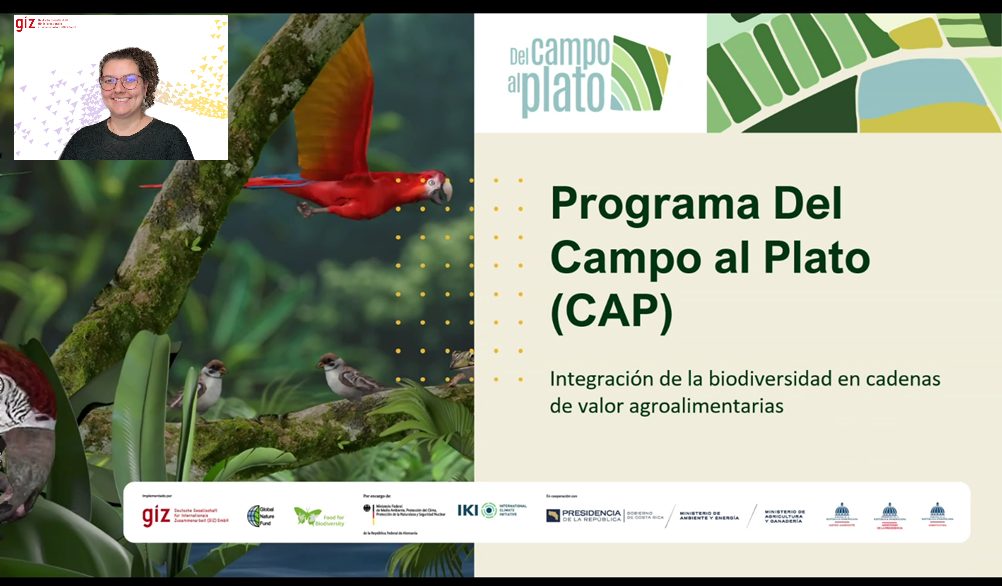
Sussan Morales (GIZ Costa Rica) introduced the Del Campo al Plato (CAP) project, which integrates biodiversity into pineapple and banana value chains in Costa Rica and the Dominican Republic. The project is part of the Biodiversity and Business portfolio and works through public-private partnerships to support companies and other actors in generating impact at farm, national, and international level.
CAP follows a bottom-up approach and includes components such as bioinputs, biodiversity action plans, accelerator programmes, women-led innovation, and financial mechanisms. More than 140 biodiversity action plans are currently under implementation in both countries, alongside 18 projects led by women focusing on bioinputs, circular economy, and biodiversity integration.
Recent developments include the approval of a national bioinput strategy in Costa Rica and the establishment of a dialogue platform on bioinputs in the Dominican Republic. Through these activities, the project supports partners in translating sustainability commitments into concrete measures on the ground.
BIO IMPULSA – Scaling Bioinput Production through the BioImpulsa Accelerator
Juan Carlos Moscoa Dobles (GIZ) presented the BioImpulsa acceleration programme, which aims to scale and support the production and use of biological inputs in pineapple and banana cultivation in Costa Rica and the Dominican Republic. The programme supports up to 12 biofactories and laboratories. Support ranges from technical development and scaling of production processes to strengthening quality control, biosafety, infrastructure, and business models. A strong emphasis is placed on environmental impact, economic viability, and social inclusion, including a gender-responsive approach.
Preliminary findings from Costa Rica show a relatively advanced sector: most biofactories already operate medium-scale facilities, with 67% focusing on microbiological production and over 80% equipped with key production technologies. While biosafety practices are well established, gaps remain in quality control systems and laboratory analysis. Commercialisation also presents opportunities, as many facilities still produce primarily for internal use.
Key challenges include limited infrastructure, equipment, and technical training, alongside strong demand for capacity-building in areas such as bioreactor management. Overall, the sector shows significant potential but requires greater institutional support and knowledge dissemination to scale sustainably.
CENIBiot-CENAT-CENIBiot – Bioles: Advancing Low-Cost and Scalable Bioinputs through Research
Emmanuel Araya Valverde (Centro Nacional de Alta Tecnología, Costa Rica) presented the role and potential of bioles, a fermented liquid bioinput derived from organic residues, as a low-cost solution for more sustainable agriculture. Bioles are already widely used in practice, but often lack standardisation, with significant variability in raw materials, production methods, and quality.
His presentation highlighted ongoing research efforts to better understand and optimise bioles through scientific analysis, standardised protocols, and field validation. Results from multi-year trials in crops such as coffee and lettuce show that bioles, particularly when enriched with nutrients, can achieve yields and product quality comparable to conventional fertilisation, while significantly reducing production costs.
Microbiological and genomic analyses further indicate that bioles contain stable and beneficial microbial communities, including nitrogen-fixing and phosphorus-solubilizing organisms, without introducing harmful pathogens. Importantly, results across different production batches show a high degree of reproducibility when production protocols are controlled.
Despite this strong potential, key challenges remain, including the need for standardisation, improved quality control, and deeper scientific characterisation of bioactive components. Overall, bioles were presented as an accessible and scalable innovation with high relevance for smallholder systems, offering a promising pathway to reduce dependence on synthetic inputs while supporting productive and sustainable farming systems.
SOS Carbon – From Invasive Seaweed to Sustainable Agricultural Inputs
Elena Martinez (SOS Carbon) presented an innovative approach to transforming invasive seaweed into sustainable agricultural inputs, highlighting the strong interlinkages between marine and land-based ecosystems. Large-scale seaweed blooms, driven by climate change and nutrient runoff, pose significant environmental and economic challenges, but also represent an underutilised resource.
SOS Carbon has developed a value chain that harvests invasive seaweed and upcycles it into bio-based agricultural products, particularly biostimulants. Using patented systems that retrofit existing fishing vessels, the approach combines environmental remediation with local job creation. The harvested biomass is treated as a valuable raw material, enabling the extraction of bioactive compounds such as amino acids, polysaccharides, and phytohormones that enhance plant growth and resilience.
Field trials across various crops demonstrate significant benefits, including higher yields, improved product quality, and increased tolerance to stress conditions such as drought or high radiation. Results also indicate the potential to substantially reduce, and in some cases replace, synthetic fertilisers while maintaining or improving productivity.
By addressing both the supply challenge of sustainable raw materials and the need for effective alternatives to conventional inputs, the approach offers a circular and scalable solution. Overall, the presentation highlighted the strong potential of marine-based bioinputs to support more resilient and sustainable agricultural systems.
IBMA – Biocontrol – Insights into Research & Practice
Brigitte Kranz (International Biocontrol Manufacturers Association, IBMA) provided an overview of the role, potential, and challenges of biocontrol solutions in Europe. Biocontrol refers to products of natural origin, including microorganisms, beneficial insects, and pheromones and is already well established in high-value crops such as fruits and vegetables, particularly in protected cultivation systems.
Her presentation highlighted that the uptake of biocontrol is often driven by external pressures, such as pesticide resistance or residue concerns. A key example is the rapid transition in Almería, Spain, where pesticide scandals and resistance issues led to a large-scale shift towards biological pest control within a few years.
While biocontrol has achieved strong success in certain sectors, its adoption in arable farming remains limited due to higher costs, lower margins, and a lack of established farming practices adapted to biological solutions. Expanding its use therefore requires not only new products but also systemic changes in farming approaches, including integrated pest management and knowledge transfer.
Despite increasing research activity and a growing number of biological active substances, regulatory barriers remain a major challenge in the EU. Lengthy and complex approval procedures slow down market access and innovation compared to other regions. Overall, the presentation underscored that while Europe has strong foundations for biocontrol, enabling policies and faster authorisation processes will be crucial to fully realise its potential.
Conclusion
The transition to bioinputs continues to move from vision to practice. This year’s webinar highlighted not only the growing relevance of biological alternatives, but also the concrete progress being made in scaling their production, application, and integration into agricultural value chains. Bioinputs are increasingly recognized as a key component of resilient farming systems, supporting soil health, reducing dependency on synthetic inputs, and strengthening long-term sustainability.
At the same time, discussions made clear that the transition requires coordinated efforts across the entire value chain. From research and innovation to enabling policies and market incentives, stakeholders must work together to create the conditions in which bioinputs can reach their full potential. In particular, producers, especially smallholders, continue to need targeted support, capacity building, and access to knowledge and financing.
If you would like to stay informed about future events, webinars, and knowledge exchanges on biological inputs and sustainable agricultural practices, you can sign up via our Microsoft Form.
Biodiversitätsverantwortliche Beschaffung braucht Orientierung
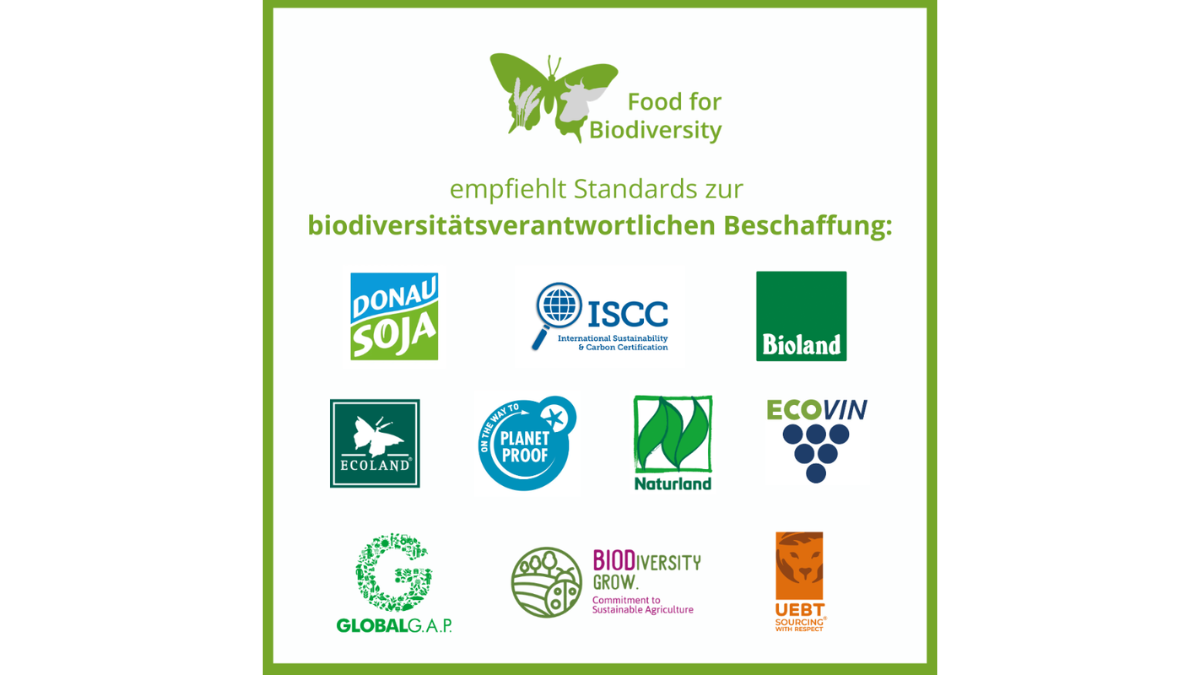
Zehn bei Food for Biodiversity engagierte Standards erfüllen bereits heute mehr als 70 % der für sie relevanten Kriterien des Basis-Sets Biodiversitätskriterien. Damit leisten sie einen wesentlichen Beitrag zum Schutz der biologischen Vielfalt und bieten Unternehmen im Einkauf Orientierung Planungssicherheit.
Auf dieser Grundlage empfiehlt Food for Biodiversity folgende Standards für eine biodiversitätsverantwortliche Beschaffung:
- Donau Soja (Guidelines, Januar 2024)
- ISCC PLUS (Version 3.4.2)
- Naturland (Richtlinien Erzeugung, Stand 05/2024, sowie ergänzende Biodiversitätsangebote)
- Bioland (Richtlinie, Beschlussfassung 18./19. November 2024)
- Ecoland (Richtlinien, Stand 01/2024)
- On the Way to PlanetProof (Plant Products, Version 5)
- ECOVIN (Richtlinien, 17. Fassung vom 08.04.2024)
- GLOBALG.A.P. IFA v6 (Version 6 Smart)
- BioDiversity Grow (Standard, Version 14, November 2025)
- UEBT – Sourcing with Respect (Standard 2020 sowie zugehörige Field Checklists)
Das Basis-Set Biodiversitätskriterien
Die Biodiversitätskriterien des Basis-Sets Europa wurden systematisch mit den Anforderungen der Mitgliedsstandards verglichen. Das Basis-Set ist ein fachlicher Referenzrahmen für die Lebensmittelbranche und unterstützt Unternehmen und Standards dabei, bestehende Anforderungen im Hinblick auf Biodiversität zu bewerten, weiterzuentwickeln und wirksamer zu machen.
Die Kriterien konzentrieren sich insbesondere auf die landwirtschaftliche Produktion und decken zentrale Handlungsbereiche ab, darunter:
- Entwicklung und Umsetzung von Biodiversity Action Plans auf Betriebsebene
- Maßnahmen zur Förderung und Vernetzung naturnaher Habitate
- Anforderungen an Bodenmanagement und Pflanzenschutz
- Schulung und Weiterbildung im Bereich Biodiversität
Hier finden Sie mehr Informationen zu der Methodik der Standardbewertung: Methodik des Abgleichs von Lebensmittelstandards mit dem Basis-Set Biodiversitätskriterien
Zielsetzung
Food for Biodiversity verfolgt mit dem Basis-Set keinen Ansatz zur Einführung eines neuen Labels. Stattdessen steht die Weiterentwicklung und Stärkung bestehender Standards im Mittelpunkt, um eine möglichst breite Wirkung für Biodiversität in den Lieferketten des Lebensmittelsektors zu erzielen.
Leitfaden für mehr Biodiversität in Produktion und Lieferketten
Ein neuer Leitfaden zeigt, wie Unternehmen der Ernährungsindustrie ihre Auswirkungen auf die biologische Vielfalt reduzieren und gleichzeitig ihre wirtschaftliche Stabilität stärken können. Hintergrund ist, dass Biodiversitätsverluste zunehmend Risiken für Lieferketten, Rohstoffverfügbarkeit und regulatorische Anforderungen darstellen.
Die Publikation bietet einen praxisnahen Überblick, wie Biodiversität systematisch in Unternehmensprozesse integriert werden kann. Im Fokus stehen insbesondere Strategien für ein wirksames Management, die Bewertung von Risiken entlang der Lieferkette sowie konkrete Maßnahmen in Bereichen wie Beschaffung, Produktion und Standortgestaltung.
Besonderer Wert wird darauf gelegt, Biodiversität in bestehende Nachhaltigkeits- und Umweltmanagementsysteme einzubinden. Ergänzende Praxisbeispiele zeigen, wie Unternehmen bereits erfolgreich Lösungen umsetzen.
Der Leitfaden richtet sich an Unternehmen, die ihre Geschäftsmodelle langfristig nachhaltiger und zukunftsfähig gestalten möchten.
Neues Pilotprojekt: Biodiversität als Chance für die Landwirtschaft
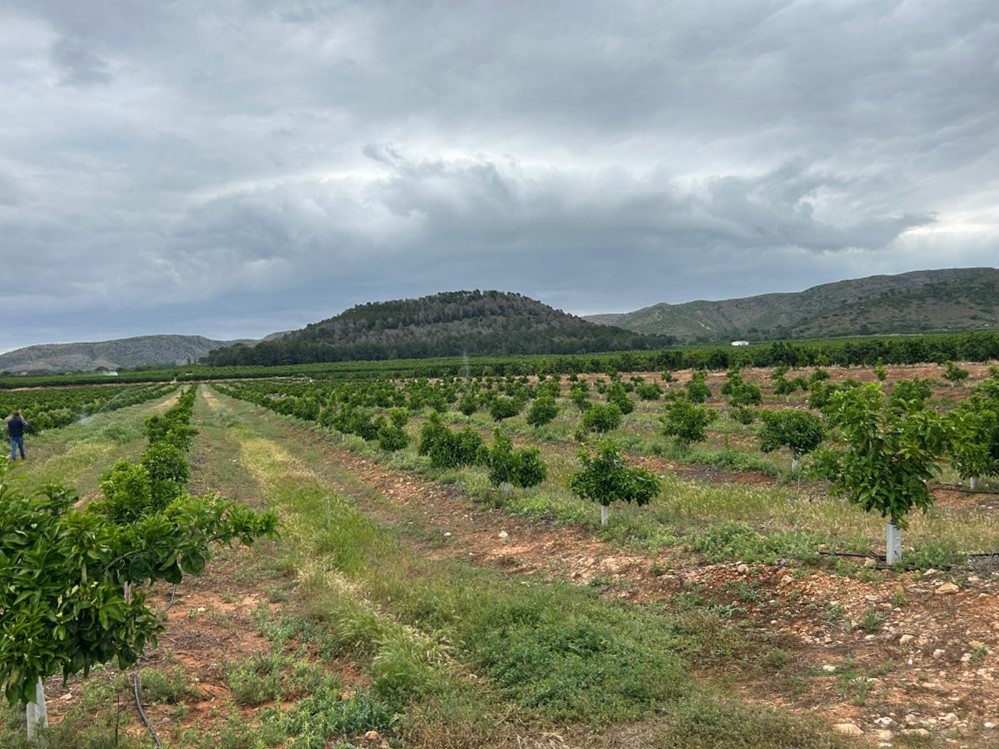
Ein neues Pilotprojekt in Spanien erprobt ein praxisnahes System zur Erfassung von Biodiversitäts- und Umweltkennzahlen auf 157 Hektar Anbaufläche. Dabei werden über 30 Indikatoren in Obst- und Gemüsebetrieben gemessen – von Bodenleben über Nützlingsvorkommen bis zum CO₂-Fußabdruck.
Das Projekt wird von Biodiversity Grow / Quality and Adviser (Koordination), GLOBALG.A.P. und dem Global Nature Fund durchgeführt. Es dient der Entwicklung des neuen GLOBALG.A.P.-Standards Sustainable Environmental Solutions (ESS), der Ende 2025 erscheinen soll, und bezieht die Biodiversitätskriterien der Initiative Food for Biodiversity mit ein.
Ziel ist es, Biodiversität messbar zu machen – und als strategischen Vorteil für eine nachhaltigere und zukunftsfähige Landwirtschaft zu nutzen.

Biodiversität: Neue gesetzliche Vorgaben für Lebensmittelunternehmen
Eine Einordnung von der Vorständin des Vereins Food for Biodiversity, Marion Hammerl, zu aktuellen gesetzlichlichen Vorgaben für Lebensmittelunternehmen und hilflichen Tools zu deren Erfüllung.